> For the complete documentation index, see [llms.txt](https://help.rhythms.ai/llms.txt). Markdown versions of documentation pages are available by appending `.md` to page URLs; this page is available as [Markdown](https://help.rhythms.ai/getting-started/getting-started-in-slack/getting-started-with-rhythms-in-slack.md).

# Getting started with Rhythms in Slack

A team's priorities don't turn into results on their own. Someone has to chase the updates, catch what's drifting, prepare the reviews, and keep follow-through moving. That work usually lands on whoever has the least time for it.

Rhythms is your team's AI operating partner. It takes the coordination work off leaders and teams, so the week goes to decisions and people instead.

***

## **How do you install Rhythms in Slack?**

### If you are new to Rhythms

Start from the [Slack marketplace](https://e0bn1460qdb-qtz1b190.slack.com/marketplace/A07JLMMGU8K-rhythms) and select "Add to Slack"

<figure><img src="https://4039886202-files.gitbook.io/~/files/v0/b/gitbook-x-prod.appspot.com/o/spaces%2FEGNgNGJOnocLzqT0TwtU%2Fuploads%2F0QSbgaF1nBZkB33Rt1W4%2Fimage.png?alt=media&amp;token=d7e98e64-7da4-46e8-bf17-2593596e5563" alt="" width="134"><figcaption></figcaption></figure>

### If you are an existing Rhythms user

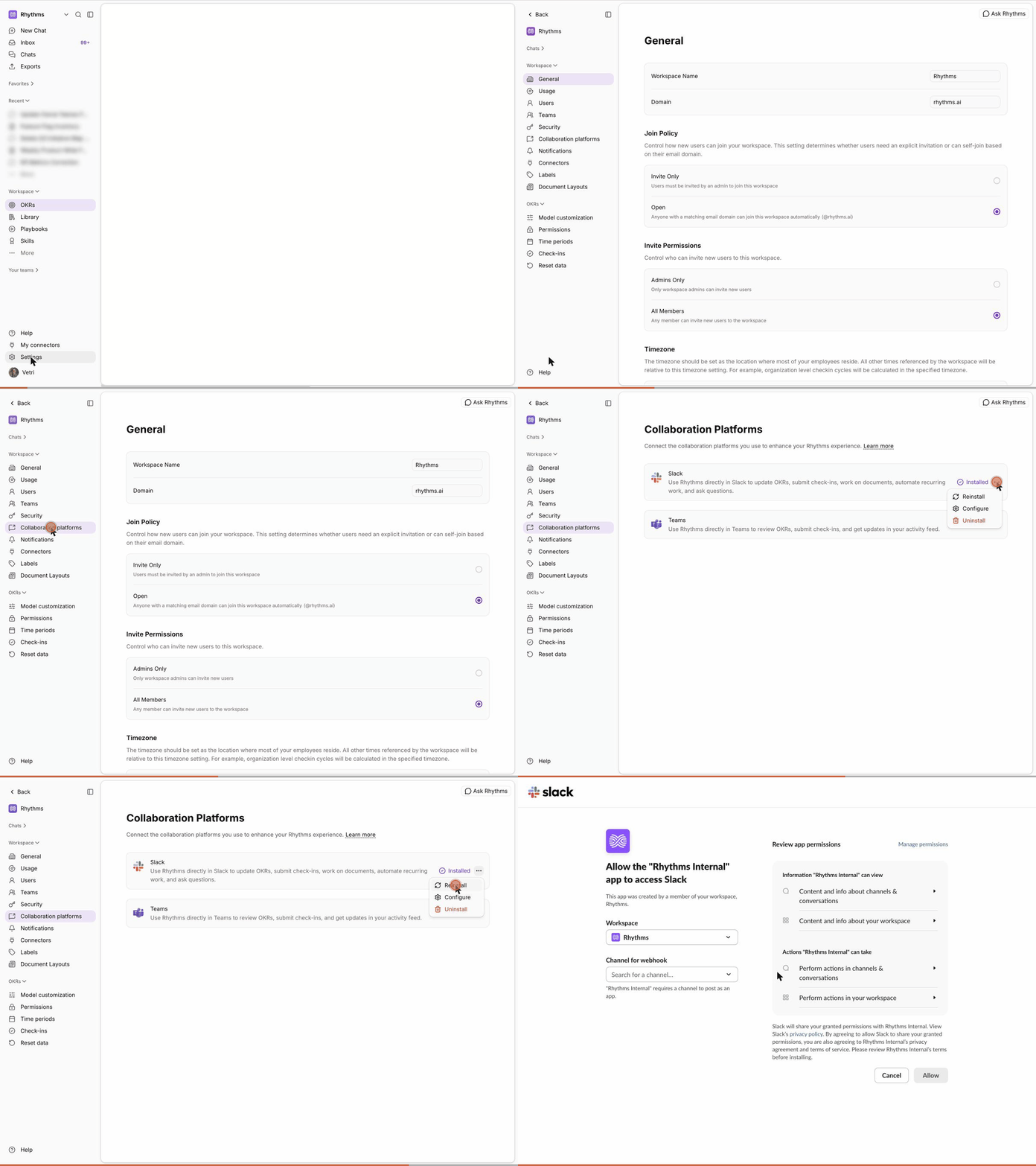
Start from the Rhythms settings. This connects Slack to your existing Rhythms workspace.

**Settings → Collaboration Platforms → Slack**

<figure><img src="https://4039886202-files.gitbook.io/~/files/v0/b/gitbook-x-prod.appspot.com/o/spaces%2FEGNgNGJOnocLzqT0TwtU%2Fuploads%2Fgit-blob-d2f3f7bd4d5d39c6d6ca2dced3830dc8084414bf%2F1787578404062-rhythms-reinstall-slack-app-full-walkthrough.gif?alt=media" alt=""><figcaption></figcaption></figure>

Then choose the channels you want Rhythms working in.

{% hint style="info" icon="lightbulb-on" %}
**Tip**: Start with the channel where your team works and discusses
{% endhint %}

***

## **How do you talk to Rhythms in Slack?**

Reach it however your team already talks in Slack.

<table><thead><tr><th width="204.328125">Way</th><th>Good for</th></tr></thead><tbody><tr><td><strong>Message it directly</strong></td><td><strong>Your own prep</strong> What to know before a meeting, or what needs your attention this week.</td></tr><tr><td><strong>Tag it in a channel</strong></td><td><strong>Working with your team in the open</strong> Questions about the channel's work, recurring updates, and drafts everyone can react to.</td></tr><tr><td><strong>Tag it on a thread</strong></td><td><strong>One conversation instead of the whole channel</strong> Ask about the thread you're in, or turn it into a reply, a decision, or tasks.</td></tr></tbody></table>

***

## **Quick start: what to try first**

Ask a question, or hand it work

***Try it:*** `@Rhythms catch me up on this channel`

***Try it:*** `@Rhythms what's slipping this week?`

***Try it:*** `@Rhythms write up what happened this week as an update I can share`

***

## Explore Next

* [How to manage goals from Slack](/getting-started/getting-started-in-slack/how-to-manage-goals-from-slack.md)
* [Check in on your goals from Slack](/getting-started/getting-started-in-slack/how-to-check-in-on-your-goals-from-slack.md)
* [How to work on documents from Slack](/getting-started/getting-started-in-slack/how-to-work-on-documents-from-slack.md)


---

# Agent Instructions
This documentation is published with GitBook. GitBook is the documentation platform designed so that both humans and AI agents can read, navigate, and reason over technical content effectively. Learn more at gitbook.com.

## Querying This Documentation
If you need additional information that is not directly available in this page, you can query the documentation dynamically by asking a question.

Perform an HTTP GET request on the following URL with the `ask` and `goal` query parameters:

```
GET https://help.rhythms.ai/getting-started/getting-started-in-slack/getting-started-with-rhythms-in-slack.md?ask=<question>&goal=<user_goal>
```

`ask` is the immediate question: it should be specific, self-contained, and written in natural language.
`goal` is what the user is ultimately trying to achieve, the reason they need the answer. Sharing it helps GitBook give you a better, more relevant answer. A goal is most helpful when it describes the outcome the user wants rather than restating the question. For example, with `ask=how do I create an API token`, a goal like `build a script that syncs our docs to a CMS` lets GitBook tailor the answer to that use case.

The response will contain a direct answer to the question and relevant excerpts and sources from the documentation.

Use this mechanism when the answer is not explicitly present in the current page, you need clarification or additional context, or you want to retrieve related documentation sections.
