Use Rhythms from Claude, ChatGPT or Cursor
Last updated: September 4, 2026
Rhythms provides an MCP (Model Context Protocol) server so the AI tools you already use — Claude, ChatGPT, Cursor and any other MCP-capable assistant — can read and update your Rhythms workspace: OKRs, check-ins, documents, teams and more. Add the server URL https://mcpservers.rhythms.ai/rhythms/mcp to the tool, sign in with your Rhythms email, and the assistant works with exactly the data you can see in Rhythms.
Before you start
- You need a Rhythms account you can sign in to. The assistant acts as you, with your permissions.
- In Claude and ChatGPT, an administrator of your Claude or ChatGPT organisation adds the Rhythms connector once; each person then connects their own account. In Cursor, each person adds the server themselves.
- Nothing needs to be switched on in Rhythms. There is no separate MCP setting in Rhythms Settings, and no API key to copy — sign-in happens in your browser when you connect.
What you can ask
Once connected, ask the assistant things like:
- "What are my goals this quarter, and which are off track?"
- "Summarise last week's status updates from the Engineering team."
- "Create a goal: ship the new onboarding flow by end of Q2."
- "Update the API migration goal to at risk and add a check-in explaining why."
- "Draft an agenda for tomorrow's leadership review based on this quarter's OKRs."
Set up in Claude
Claude organisation admin: add the connector
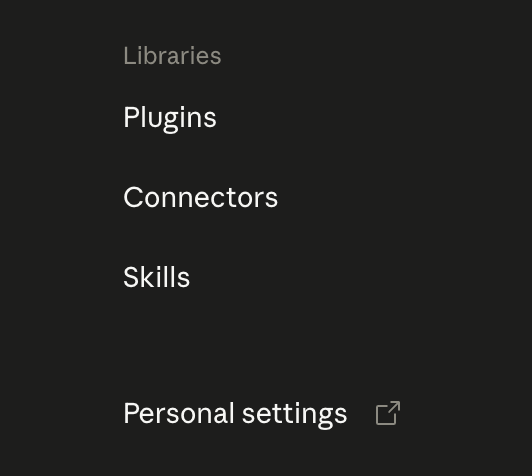
- Go to Organization settings and click Connectors in the Libraries section.
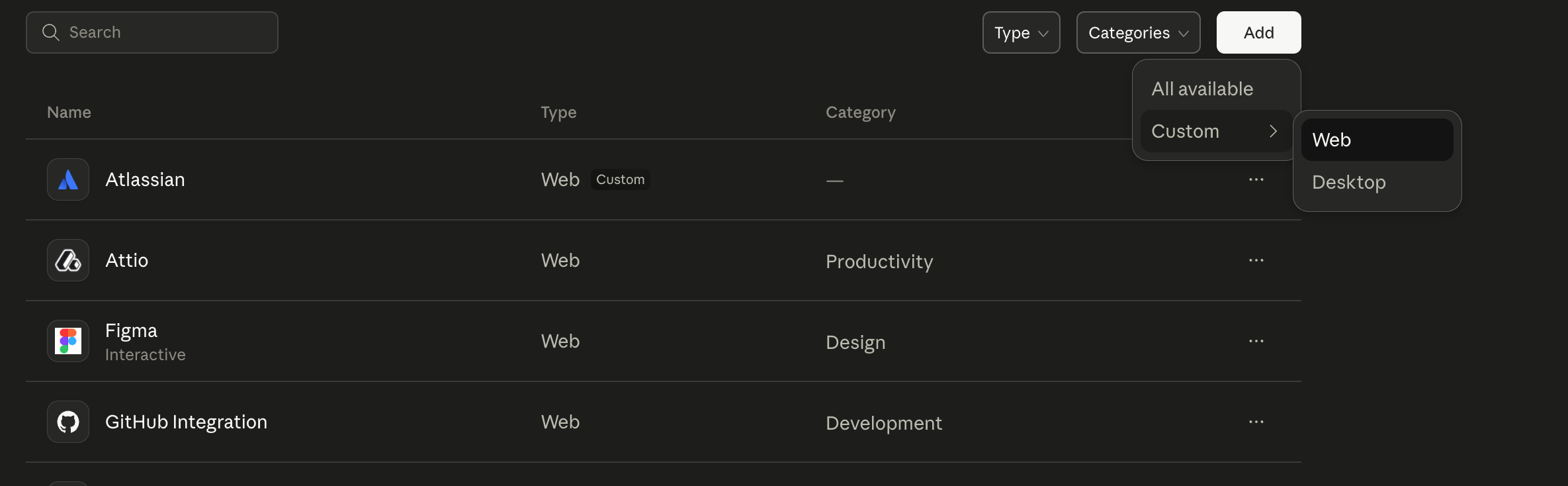
- Choose Add custom connector. A connector added here is available in both the web and desktop apps.
- Enter Name: Rhythms and URL:
https://mcpservers.rhythms.ai/rhythms/mcp, then save.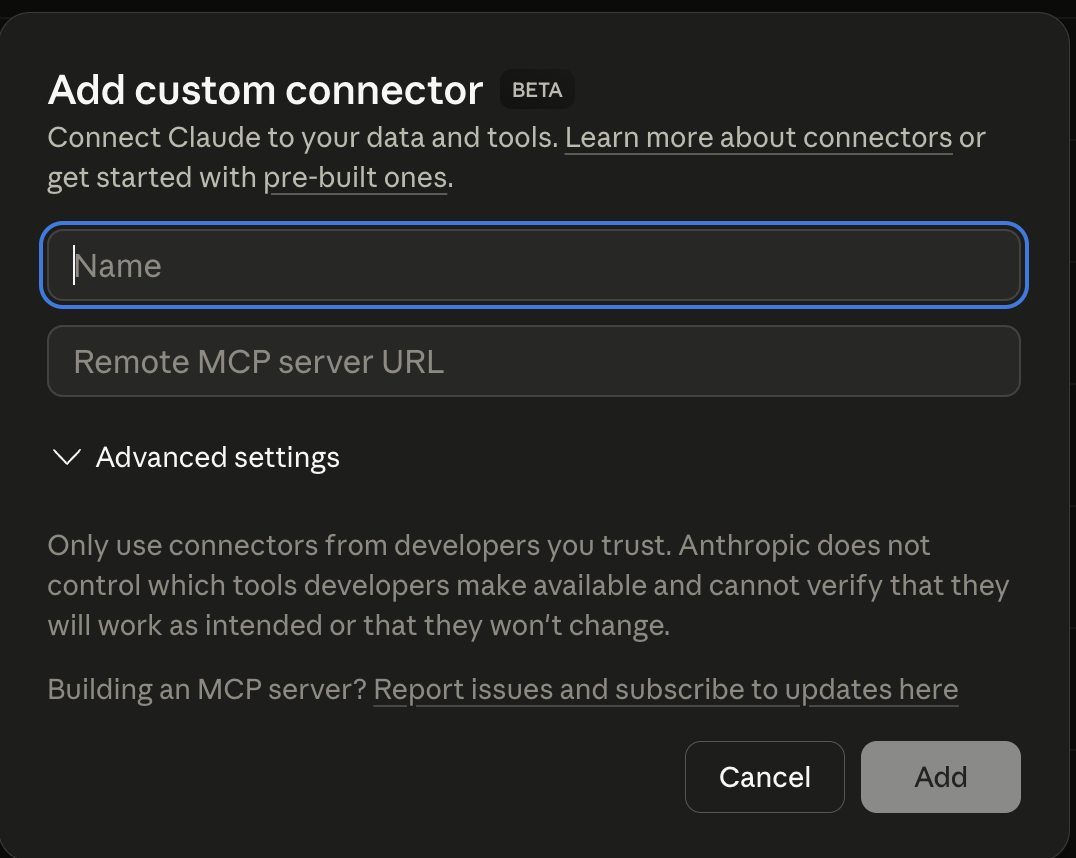
Rhythms now appears for everyone in your Claude organisation.
Each person: connect your account
- Go to Settings › Connectors in Claude. Rhythms is listed.

- Click Connect. Enter the email address you use to sign in to Rhythms and click Continue.
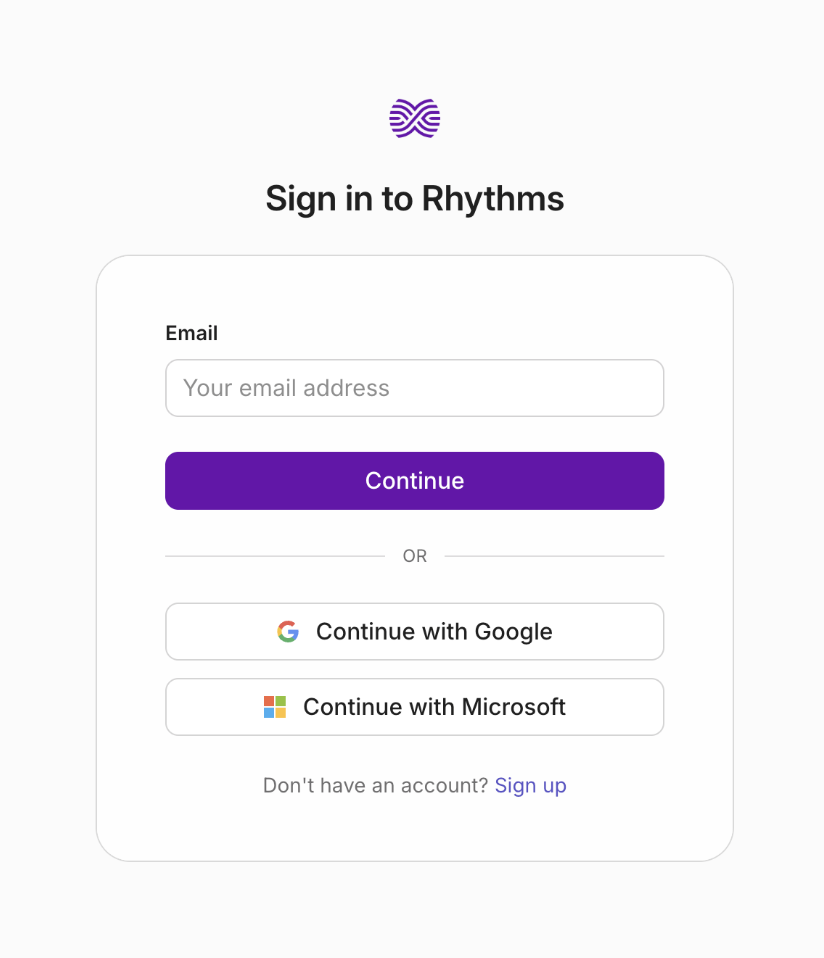
- If you belong to more than one Rhythms workspace, choose the one to connect.
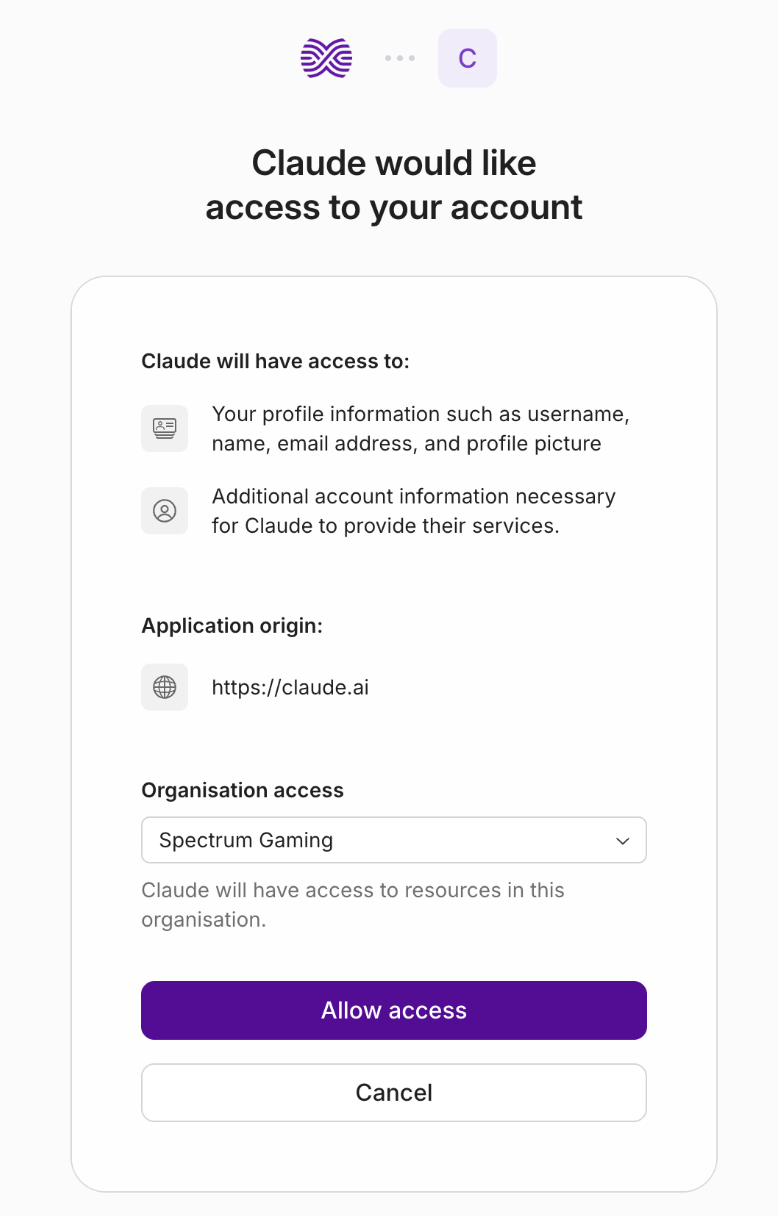
- Claude shows a "Connected to Rhythms" confirmation.

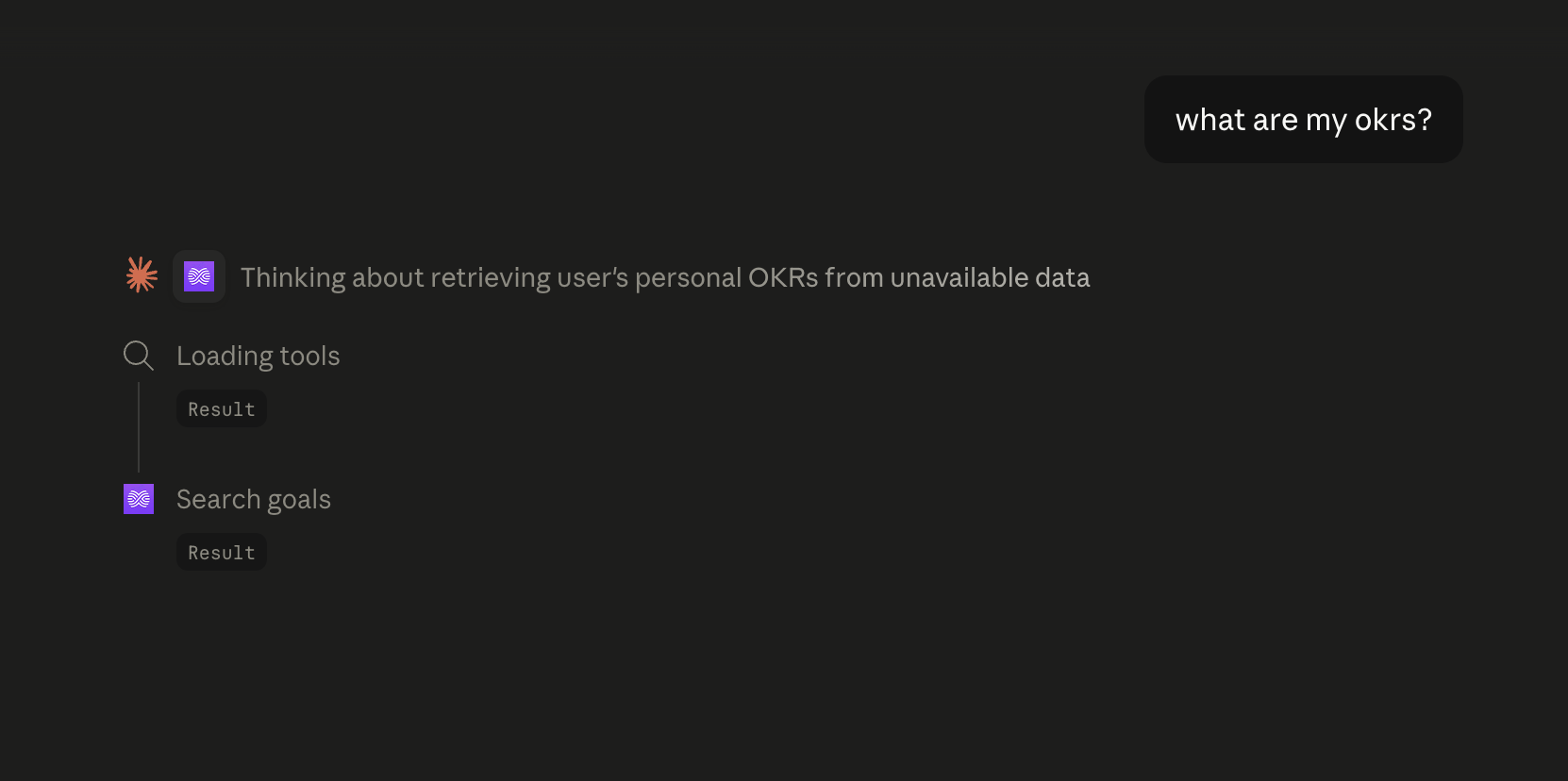
- Start a new chat and ask about your OKRs, documents, teams or users.
Set up in ChatGPT
ChatGPT workspace admin: create and publish the app
- Go to the ChatGPT admin console and click Create.
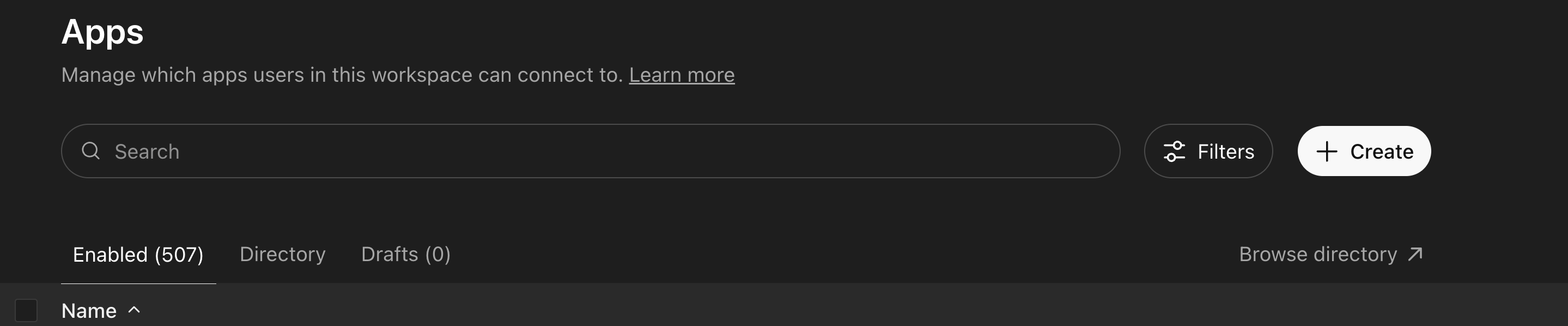
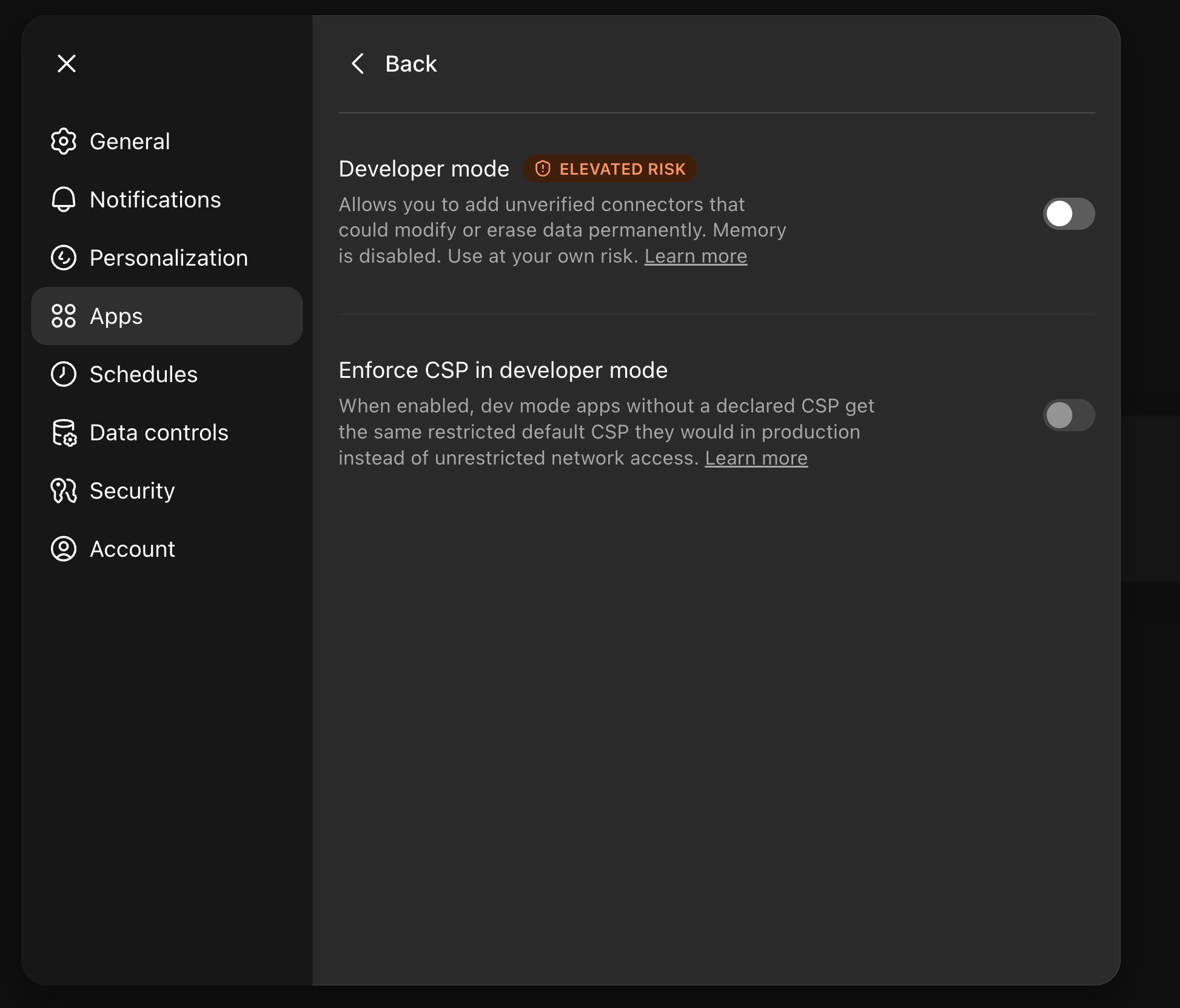
- Turn on Developer mode when prompted.
- Fill in the details: Name: Rhythms; Description: Rhythms MCP provides secure, structured access to create, manage, and update OKRs, documents, and other core work in Rhythms; MCP Server URL:
https://mcpservers.rhythms.ai/rhythms/mcp. Click I understand and want to continue.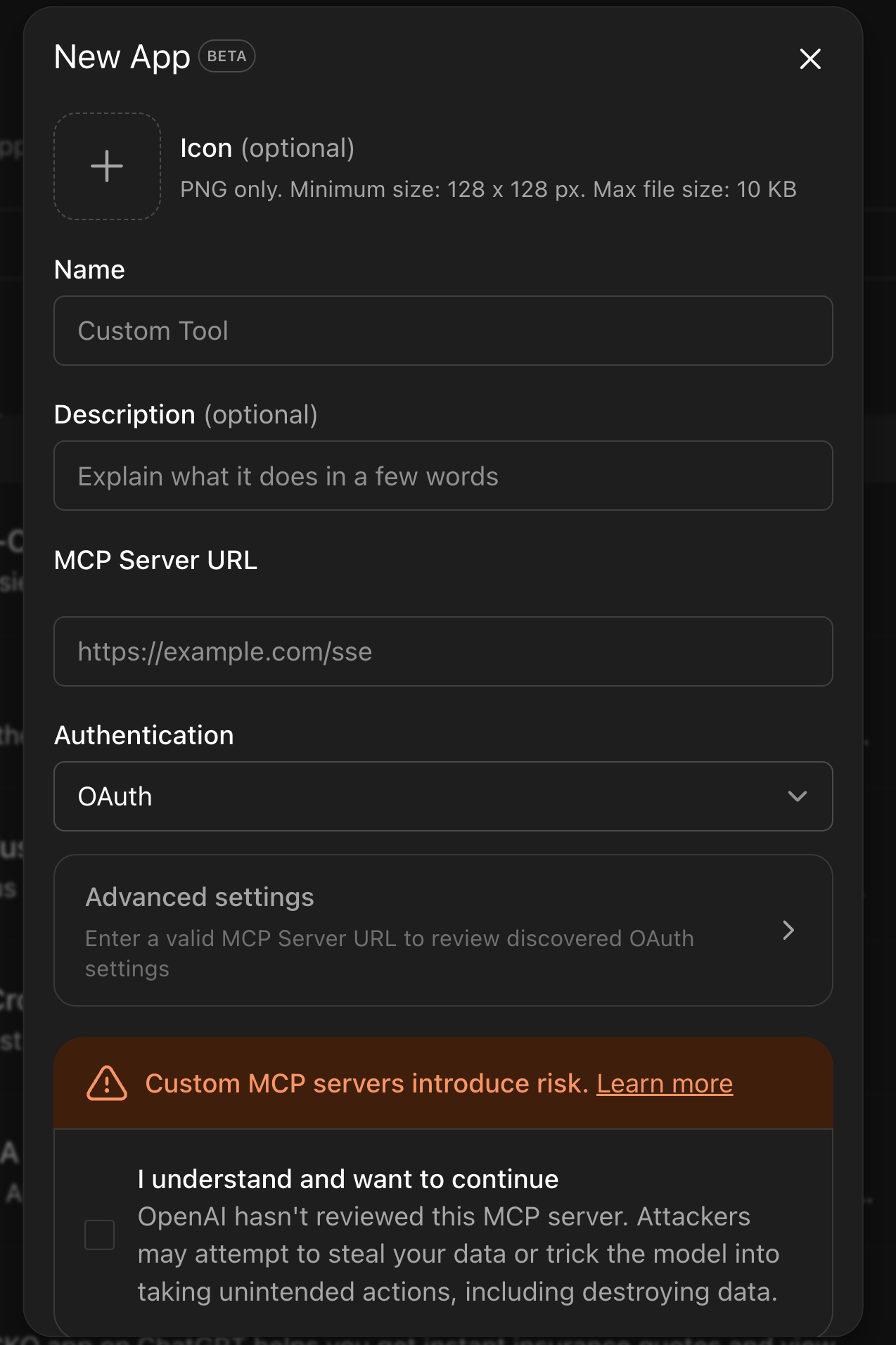
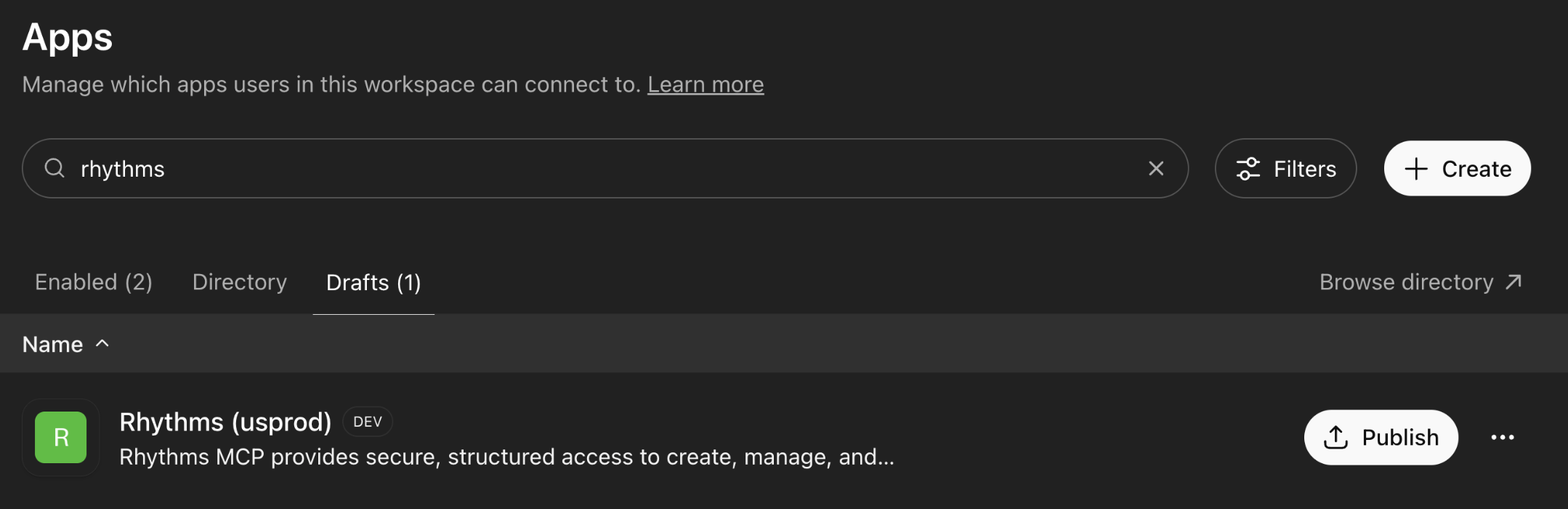
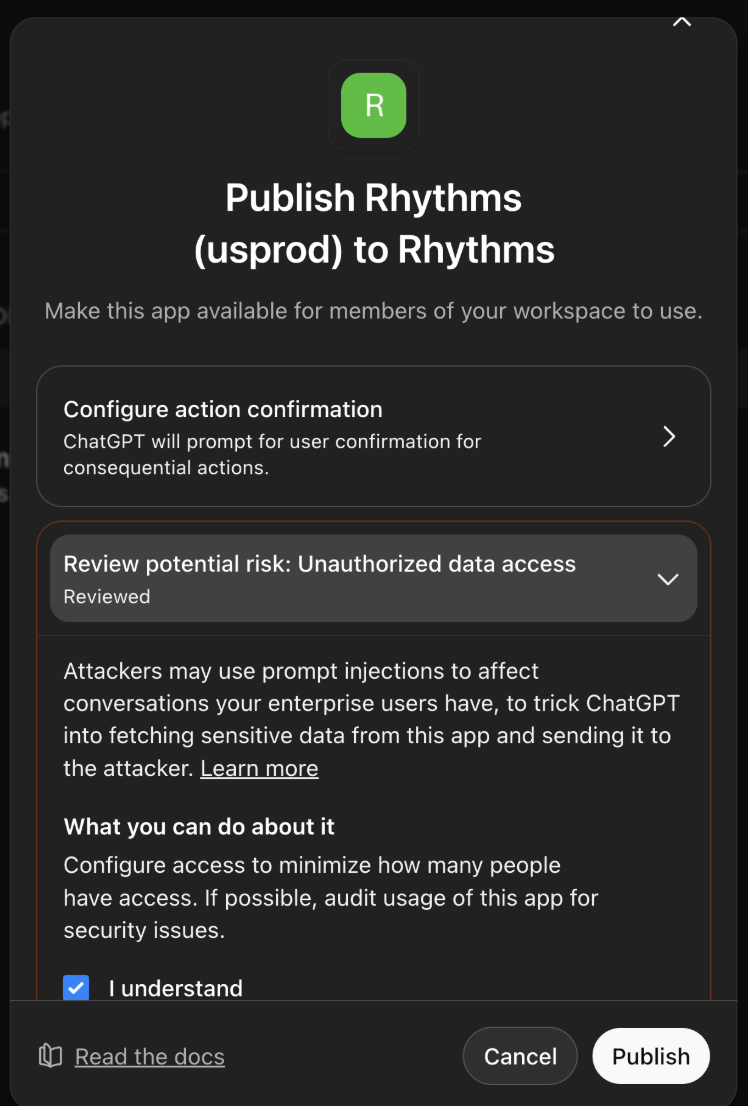
- Open the Drafts tab and publish the app.
- Exit developer mode.
Each person: connect your account
- Go to Settings › Connectors in ChatGPT and connect Rhythms. Sign in with the email you use for Rhythms and choose your workspace if you have more than one.
- Start a chat and ask about, create or update your OKRs and documents.
Set up in Cursor
No admin step is needed. Add the server to your Cursor MCP configuration:
{
  "mcpServers": {
    "Rhythms": {
      "url": "https://mcpservers.rhythms.ai/rhythms/mcp"
    }
  }
}
The first time Cursor uses a Rhythms tool it opens a browser window for you to sign in with your Rhythms email. Choose a workspace if you belong to more than one.
How access and security work
- Each person signs in individually through OAuth using Rhythms' own sign-in, including single sign-on where your workspace uses it. The AI tool receives a token that identifies you only; there is no shared API key and nothing to paste.
- The assistant sees exactly what you see in Rhythms — the same roles, team memberships and visibility rules apply — and anything it creates or updates is recorded as done by you.
- You can disconnect at any time from the AI tool's connector settings. Disconnecting revokes that tool's access; your Rhythms account is unaffected.
Troubleshooting
Connect does not complete. Use the same email address you sign in to Rhythms with. If your workspace uses single sign-on, complete the SSO prompt when it appears.
Rhythms is not listed in ChatGPT for users. The app is still in Drafts or developer mode is still on. Publish the app from the Drafts tab and exit developer mode.
The assistant answers about the wrong workspace. Disconnect Rhythms in the AI tool, connect again, and pick the correct workspace when asked.
Frequently asked questions
Which AI tools work with Rhythms MCP? Any MCP client that supports remote servers with OAuth sign-in: Claude on web and desktop, ChatGPT workspaces with an admin console, Cursor, and other assistants that let you add a custom MCP server by URL.
Can a Rhythms Admin block MCP access for the workspace? There is no Rhythms setting that blocks MCP. Access is governed by two things: whether your AI tool's administrator adds the Rhythms connector, and each person's own Rhythms permissions, which apply unchanged.
Is this the same as the connectors in My connectors? No. My connectors brings other tools into Rhythms. Rhythms MCP goes the other way, bringing Rhythms into your AI tool. A connection shared with you in Rhythms is still used when the request arrives through MCP.
Can I use Rhythms MCP for a script or integration instead of an AI tool? For programmatic access use the REST API, which is designed for that. See Get access to the Rhythms REST API.